Children with dyslexia often struggle with decoding words, reading fluently, and recognizing sight words. Reading is essential for success in nearly every subject at school, so these challenges can drastically affect a student’s academic performance. However, there are strategies you can use at home to help your child with dyslexia develop stronger reading skills. Try using the tips below with your child:
How Multi-Sensory Tools Help Children with Dyslexia Learn to Read
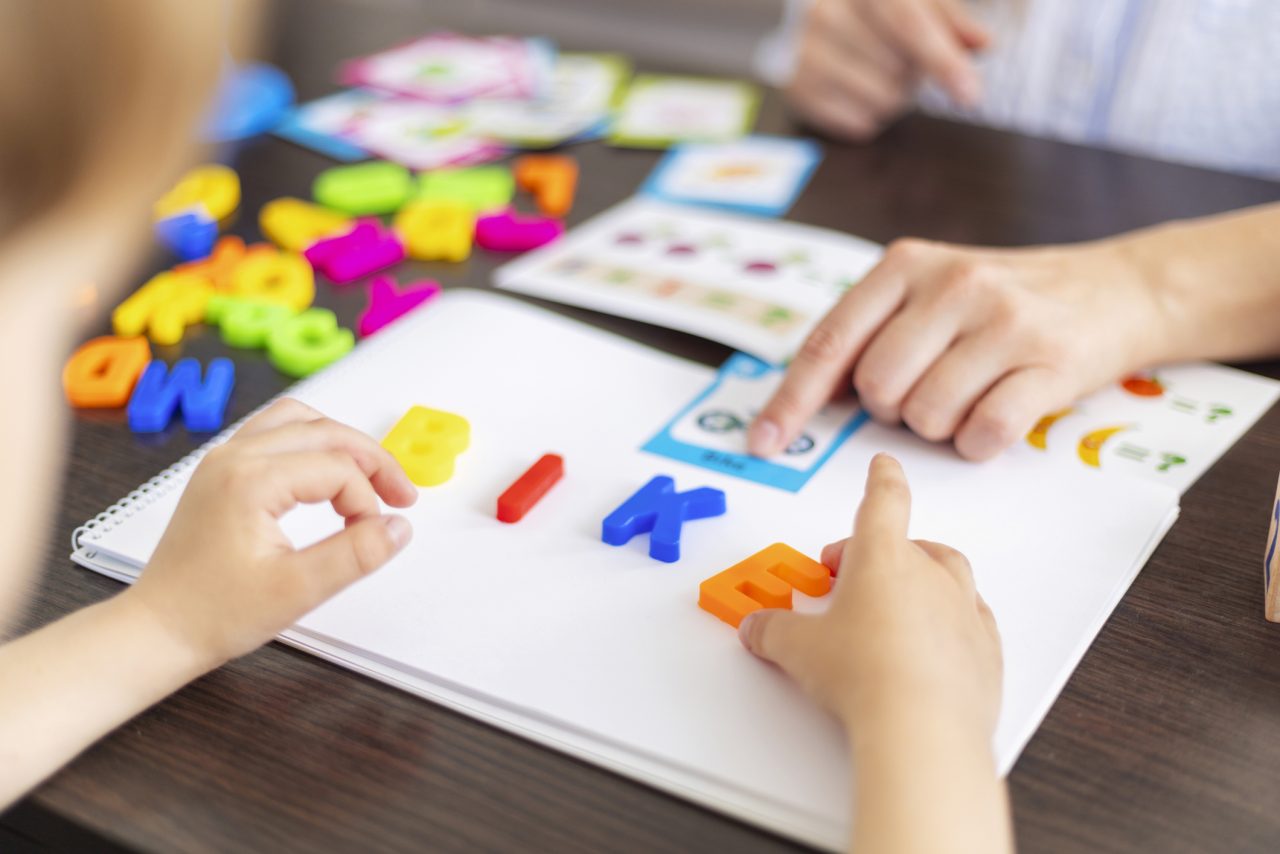
Students with dyslexia tend to respond well to a multi-sensory approach to teaching, which integrates the visual, auditory, and tactile/kinesthetic modalities. For young students, for example, when teaching them the name of each letter and how to write it, you can fill a cookie tray with salt or colored sand and have them trace each letter while saying its formation out loud. For example, when writing the lower-case letter f, they can trace it in the sand while saying aloud, “around, down, and across.” For t, they would say “down and across” as they write it. You can also have them blend sounds together to form words using magnetic tiles or whiteboards. The more multi-sensory tools you can integrate, the better!
Why Daily Reading Practice Helps Children with Dyslexia
It is important that your child with dyslexia reads every day, ideally during a designated reading time. This might be right after school or before dinner; whatever time works for them is fine as long as they stay consistent. While decodable books containing sound patterns they have already learned are ideal, other books are fine too. Try to find books at their level on topics they’re interested in. If they like dinosaurs or rainbows, look for books on those topics to help engage them. The more interested they are in the topic, the more likely they will enjoy reading. If reading a whole book on their own is too challenging, you can also try alternating reading where you read a page and then they read one until they are ready to read the complete book on their own.
How to Make Reading Enjoyable for Children with Dyslexia
While reading may be challenging for your child with dyslexia, the more enjoyable you can make the experience, the better. Try setting up a reading nook in your child’s room with a comfortable couch and some pillows that are dedicated just to reading. You can also set up a family reading hour (once per week, every other day, or every day - whatever works for your family) where every family member selects a book to read and you all sit together reading these books. Model for your child that reading is an enjoyable experience and a great way to relax and unwind.
How Orton Gillingham Tutoring Helps Students with Dyslexia
The best methodology for tutoring students with dyslexia is the Orton Gillingham approach, which is a systematic, research-based, multi-sensory method that helps students develop their reading and spelling skills.
If your child with dyslexia continues to struggle with reading despite helping them at home, you may want to consider Orton Gillingham tutoring. The Orton Gillingham method is an evidence-based, multi-sensory method that helps students improve their decoding and spelling skills. With this method, students learn individual letters and sounds using a multi-sensory approach, and how to blend those sounds together to form words. They later learn to read and spell words with blends, consonant digraphs, vowel digraphs, silent e patterns, r-controlled patterns, and multi-syllabic words, all using a systematic, multi-sensory approach. This type of dyslexia tutoring using the Orton Gillingham technique can help your child develop much stronger reading skills.
Signs Your Child May Have Dyslexia
Many parents often ask: What are signs that my child may have dyslexia? If you notice your child has difficulty with any of the skills below, they may have dyslexia and you may want to consider specialized dyslexia tutoring for them:
- Trouble identifying the names of the letters and their corresponding sounds
- Difficulty sounding out words
- Trouble spelling words
- Slow reading
- Exhaustion from extreme effort put into trying to read
- Reading avoidance
- Low self-esteem related to reading
If you live in Boca Raton, Delray Beach, Boynton Beach, Parkland, Coral Springs, or other areas of Palm Beach or Broward Counties and are looking for a specialized tutoring program, Knowledge Plus Tutoring can help! We specialize in one-on-one in-person dyslexia tutoring and Orton Gillingham instruction. We also offer virtual dyslexia tutoring to students nationwide.
Using Step Up Scholarships for Dyslexia Tutoring
If your child qualifies for Step Up For Students scholarship funding, you may be able to use these funds for dyslexia tutoring. Step Up scholarships allow parents to select educational services they feel are best for their child, including specialized tutoring. Knowledge Plus Tutoring is a Step Up approved tutoring provider, and we would be happy to help your child with Step Up tutoring.
As students move through school, the reading demands increase rapidly. Help your child with dyslexia build stronger reading skills with these ideas and they will likely become more confident and successful in school.
Frequently Asked Questions
How can I help my child with dyslexia improve their reading skills?
You can help your child with dyslexia improve their reading skills by encouraging them to read daily and sound out words as they read, rather than guessing at the correct pronunciation of unknown words. You can use multi-sensory tools, like colored sand or shaving cream, for practice with letter writing, and you can use magnetic tiles to practice blending sounds together to form words.
What is the best tutoring method for dyslexia?
The best tutoring method for students with dyslexia is Orton Gillingham tutoring. The Orton Gillingham method is a research-based, multi-sensory, systematic approach that helps students build their reading and spelling skills.
Can tutoring help children with dyslexia?
Yes, absolutely! Individualized one-one-one tutoring using multi-sensory techniques, including tutoring using the Orton Gillingham approach, can help students with dyslexia immensely improve their reading and spelling skills
How can I find a dyslexia tutor near me?
When looking for a dyslexia tutor for your child, try to find a tutoring program that specializes in working with neurodiverse students using research-based, multi-sensory techniques, including the Orton Gillingham approach, that are individualized to the needs of each student.
Dr. Emily Levy holds her Doctorate Degree in Education and has more than twenty years of experience helping students with dyslexia improve their reading and spelling skills. She specializes in academic remediation and Orton Gillingham tutoring for students with dyslexia, ADHD, and other learning challenges.